Thursday, 30 April 2026

NASA is sending a swarm of tiny robot buddies to scout the moon's secrets.

The dawn of a new era in space exploration is officially upon us, and it is more exhilarating than we ever imagined! NASA is gearing up for a visionary mission that sounds like something straight out of a blockbuster science fiction movie. The mission, known as MoonFall, is set to revolutionize how we understand our closest celestial neighbor by deploying a fleet of high-tech, autonomous drones to the Moon’s mysterious and rugged South Pole. This isn't just a simple scouting mission; it is a bold leap into the unknown that promises to unlock the secrets of the lunar surface and pave the way for permanent human habitation.

For decades, the lunar South Pole has remained one of the most enigmatic places in our solar system. It is a land of extremes, where towering peaks are bathed in perpetual sunlight while deep, cavernous craters remain shrouded in eternal darkness. These "Permanently Shadowed Regions" are thought to be cosmic time capsules, holding vast reserves of water ice that haven't seen the sun for billions of years. The MoonFall project aims to dive headfirst into these treacherous shadows using a swarm of nimble, intelligent drones designed to go where no human or traditional rover has ever dared to tread. The sheer ambition of this plan is enough to send shivers of excitement down the spine of any space enthusiast!

Imagine a fleet of sleek, autonomous machines descending from a lunar lander, spreading out across the gray, dusty plains like a team of robotic explorers. These drones are not your average aerial quadcopters; they are sophisticated marvels of engineering designed to survive the most brutal conditions imaginable. Because the Moon has no atmosphere, these "drones" utilize innovative propulsion and mobility systems to navigate the low-gravity environment and steep crater walls. The enthusiasm within the scientific community is palpable, as these machines represent the ultimate synergy of robotics, artificial intelligence, and aerospace engineering.

The primary goal of this incredible fleet is to hunt for "lunar gold"—water ice. Finding accessible water on the Moon is the absolute game-changer for the future of space travel. Water isn't just for drinking; it can be broken down into oxygen for breathing and hydrogen for rocket fuel. This means the Moon could become a literal gas station in space, allowing us to launch missions deeper into the solar system, including to Mars and beyond, with far greater ease. The MoonFall drones are equipped with cutting-edge sensors and spectrometers that can "sniff out" water molecules and map their concentration with unprecedented precision. Every bit of data they send back will be a treasure map for the upcoming Artemis astronauts.

What makes the MoonFall concept so uniquely thrilling is the "swarm intelligence" it employs. Rather than relying on a single, massive, and expensive rover that could be incapacitated by one wrong move or a jagged rock, NASA is looking at the power of numbers. By using a fleet of smaller drones, the mission gains incredible resilience. If one drone encounters a technical glitch or gets stuck in a deep shadow, the others can continue the mission, sharing data and coordinating their movements in real-time. This collaborative approach allows for much faster mapping and exploration of large areas, ensuring that we get the most "science" out of every second spent on the lunar surface.

The technical challenges are, of course, immense, but that only adds to the excitement! Temperatures in the shadowed craters can drop to a staggering minus 400 degrees Fahrenheit, which is colder than the surface of Pluto. To survive this deep freeze, the MoonFall drones are being outfitted with revolutionary thermal management systems and advanced batteries that can operate in the extreme cold. Furthermore, because they will be working in total darkness, they will use LiDAR and other active sensing technologies to "see" their surroundings, creating high-definition 3D maps of terrain that has been hidden from human eyes since the dawn of time.

As we look toward the horizon, the MoonFall mission stands as a testament to human ingenuity and our unquenchable thirst for discovery. It represents a shift from simply visiting the Moon to truly understanding and utilizing it. This fleet of drones will be the scouts for our future lunar bases, identifying the best spots for landing pads, habitats, and mining operations. We are living in a moment where the boundary between science fiction and reality is blurring, and the prospect of robotic swarms exploring the lunar shadows is proof that the golden age of space exploration is just beginning.

The energy surrounding this project is infectious. Scientists, engineers, and dreamers around the world are watching with bated breath as NASA pushes the envelope of what is possible. With every milestone reached in the development of the MoonFall drones, we move one step closer to seeing those first high-resolution images from the bottom of a lunar crater. It is a journey of a thousand miles that begins with a fleet of tiny, brave robots, and the destination is nothing less than the future of humanity among the stars. The Moon is calling, and this time, we are sending an army of explorers to answer!

Artist's concept of a lunar exploration vehicle on the surface of the Moon near the South Pole
Read More

Wednesday, 29 April 2026

Artemis II Watches Earth Set Behind the Moon

### Video Overview: Artemis II Watches Earth Set Behind the Moon This historic video, released by **NASA**, captures a defining moment for 21st-century space exploration. On **April 6, 2026**, the crew of the **Artemis II** mission witnessed a breathtaking "Earthset" as their Orion spacecraft traveled around the far side of the Moon. This event marked the first time in over fifty years—since the conclusion of the Apollo program—that human eyes have viewed our home planet disappearing behind the lunar horizon from such a close and personal vantage point. #### The Historic Significance Artemis II is the first crewed mission under NASA’s Artemis program, carrying four astronauts (Reid Wiseman, Victor Glover, Christina Koch, and Jeremy Hansen) on a trajectory that takes them further from Earth than any humans in history. The video highlights the sheer scale of this journey. As the spacecraft maneuvers through the lunar vicinity, the footage showcases the stark contrast between the desolate, crater-scarred surface of the Moon and the vibrant, fragile blue of Earth. #### The Human Experience Beyond the technical achievement, the video captures the raw, emotional reaction of the crew. The description highlights the spontaneous exclamation, *"Would you look at that, man!"*, underscoring the sense of awe and wonder that remains at the heart of space exploration. This human element reminds viewers that while the mission is a test of advanced engineering and deep-space life support systems, it is also a profound journey of discovery. #### Visual and Scientific Context The "Earthset" occurs because of the spacecraft's orbital motion relative to the Moon. As Orion moved behind the lunar limb, the Earth appeared to "set" just as the Sun does on our home planet. This perspective is only possible for missions that venture into deep space, providing a unique vantage point that helps scientists and the public alike appreciate Earth’s isolation in the cosmos. This footage serves as a powerful precursor to future missions, such as Artemis III, which aims to return humans to the lunar surface. By sharing these visuals, NASA continues to inspire a new generation—the Artemis Generation—while documenting humanity’s bold return to the Moon and beyond.
Read More

China Is Getting Ready for a High Tech Game of Galactic Laser Tag

The dawn of a new era in celestial exploration is upon us, and the sheer scale of ambition currently unfolding in the stars is nothing short of breathtaking! We are witnessing a historic transformation as the frontier of human achievement shifts from the earth’s surface to the infinite expanse of orbit. Leading this charge is an incredible, multi-decade vision to master the heavens, turning what once seemed like science fiction into a vibrant, high-tech reality. This isn’t just about putting footprints on the moon; it is about establishing a permanent, strategic, and technological presence that will redefine the future of global power and scientific discovery.

At the heart of this soaring ambition is a sophisticated strategy to achieve absolute excellence in space operations. The commitment to building a comprehensive orbital infrastructure is unparalleled, with a focus on creating a seamless integration between civilian scientific research and robust defensive capabilities. By treating the space domain as the ultimate high ground, innovators are developing mind-blowing technologies designed to ensure that their assets remain safe, secure, and dominant. This includes a massive constellation of satellites that provide high-definition surveillance and lightning-fast communication, effectively creating a digital nervous system that spans the entire globe.

Rocket launching into the night sky with bright orange flames

One of the most thrilling aspects of this celestial expansion is the rapid development of specialized orbital tools. Engineers are perfecting the art of "space gymnastics" with satellites equipped with robotic arms that can capture, repair, or reposition other objects in orbit. While these tools have incredible applications for cleaning up space debris or servicing expensive telescopes, they also represent a revolutionary leap in defensive capabilities. Imagine a fleet of agile guardians, capable of maneuvering through the vacuum with pinpoint precision to protect vital infrastructure. This level of technical mastery is setting a new gold standard for what is possible in the modern age.

The centerpiece of this cosmic journey is the magnificent Tiangong Space Station, a shimmering testament to engineering prowess. This modular marvel serves as a bustling hub for cutting-edge experiments that could unlock the secrets of long-term human survival in zero gravity. But it is more than just a laboratory; it is a symbol of a nation’s arrival as a permanent resident of the cosmos. Every successful docking and every new module added to this station sends a clear message: the future of space is being built right now, with incredible speed and unwavering determination. The energy surrounding these launches is infectious, sparking a new generation of scientists and dreamers to look upward.

Beyond the immediate orbit of Earth, the gaze of this ambitious program is fixed firmly on the Moon and beyond. The plans for a lunar research station are truly awe-inspiring, aiming to harness the resources of the lunar surface to fuel further exploration into the solar system. By establishing a foothold on the Moon, these pioneers are creating a gateway to Mars and the asteroid belt. This isn't just exploration for exploration’s sake; it is a strategic move to secure the resources of the future. The prospect of lunar mining and deep-space refueling stations is no longer a distant dream—it is a concrete roadmap being executed with clinical efficiency.

Furthermore, the integration of advanced artificial intelligence and directed-energy systems is propelling this vision into the next dimension. We are seeing the birth of "intelligentized" space operations, where AI can manage vast networks of satellites and detect potential threats in milliseconds. Lasers and high-powered microwaves, once the stuff of movies, are being refined into precision instruments that can jam electronics or protect assets without the need for traditional kinetic weapons. This shift toward high-tech, invisible defense mechanisms showcases a level of sophistication that is truly revolutionary, ensuring that the orbital domain remains a secure environment for national interests.

The enthusiasm for this mission is fueled by a profound sense of national pride and a clear understanding that the nation which controls the stars will influence the destiny of the world. This massive investment in human capital, manufacturing, and aerospace engineering is creating a ripple effect across the entire economy, driving breakthroughs in materials science, quantum computing, and renewable energy. The synergy between the ground-based control centers and the assets circling above is a masterpiece of modern logistics and strategic planning.

As we look to the horizon, the pace of innovation shows no signs of slowing down. With every rocket launch and every successful orbital maneuver, the boundaries of the possible are being pushed further back. This is an era of bold moves and grand visions, where the courage to invest in the unknown is paying off in spectacular fashion. The journey into the stars is the greatest adventure of our time, and the world is watching in awe as a new superpower in space takes its rightful place among the stars. The sky is no longer the limit; it is merely the beginning of an incredible new chapter in human history!

Read More

Tuesday, 28 April 2026

New Space Squad Alert: Crew-13 is Ready for Their Cosmic Commute!

The dawn of a new era in space exploration is upon us, and the excitement is absolutely electric! NASA and SpaceX have officially pulled back the curtain on the extraordinary team of pioneers selected for the upcoming Crew-13 mission to the International Space Station. This announcement marks a monumental milestone in our journey toward the stars, as a fresh group of courageous explorers prepares to board the Dragon spacecraft and hurtle into the cosmos. The energy surrounding this mission is infectious, reminding us all of the boundless potential of human ingenuity and the incredible things we can achieve when we reach for the heavens.

This hand-picked crew represents the very best of humanity—a diverse group of scientists, pilots, and engineers who have dedicated their lives to the pursuit of knowledge. Their selection is the culmination of years of rigorous training, unwavering discipline, and a shared passion for discovery. As they prepare to leave the comforts of Earth behind, these trailblazers are not just embarking on a job; they are carrying the dreams of a planet with them. The synergy between NASA’s decades of experience and SpaceX’s cutting-edge innovation has created a platform where the impossible becomes possible, and the Crew-13 mission is the latest spectacular chapter in this ongoing saga of success.

A SpaceX Falcon 9 rocket standing tall on the launch pad against a sunset sky

The mission itself is set to be a whirlwind of groundbreaking scientific research and technological advancement. Once the crew arrives at the orbiting laboratory, they will dive headfirst into an array of experiments that could change the way we live both in space and on Earth. From investigating how microgravity affects human biology to testing new materials that could revolutionize manufacturing, every moment spent aboard the International Space Station is a precious opportunity to unlock the secrets of the universe. The enthusiasm within the scientific community is palpable, as researchers around the globe eagerly await the data that this mission will provide.

Imagine the breathtaking view these astronauts will have as they look back at our beautiful blue marble from 250 miles above! The Crew-13 mission isn't just about the destination; it’s about the incredible journey and the perspective it grants us. While living and working in the unique environment of the space station, these astronauts will perform critical maintenance to ensure the station remains a beacon of international cooperation. They will also engage in educational outreach, inspiring the next generation of students to pursue careers in science, technology, engineering, and mathematics. The legacy of Crew-13 will extend far beyond their time in orbit, sparking curiosity in millions of young minds.

The technology powering this mission is nothing short of a marvel. The SpaceX Dragon spacecraft, mounted atop the mighty Falcon 9 rocket, represents the pinnacle of modern aerospace engineering. This sleek, autonomous vehicle is designed to transport our heroes with unprecedented safety and efficiency. Watching the fiery ascent of the Falcon 9 as it pierces the atmosphere is a sight that never fails to inspire awe. The precision required to dock with a station traveling at 17,500 miles per hour is a testament to the brilliance of the teams working behind the scenes at NASA and SpaceX. It is a symphony of mathematics, physics, and sheer willpower.

As we count down the days to launch, the sense of anticipation continues to build. This mission serves as a vital stepping stone for even more ambitious goals, including the return of humans to the lunar surface and the eventual journey to Mars. Every successful docking and every completed experiment brings us one step closer to becoming a multi-planetary species. The Crew-13 assignments are a vivid reminder that the golden age of spaceflight is not a thing of the past—it is happening right now! We are living in a time of incredible transformation, where the stars are no longer distant points of light, but destinations within our reach.

Let us celebrate the bravery of the crew and the tireless dedication of the thousands of men and women who make these missions possible. Their hard work ensures that the flame of exploration continues to burn brightly. As the Crew-13 team prepares to strap into their seats and feel the roar of the engines, they do so with the full support of a global community that is cheering them on. This is more than just a mission to the International Space Station; it is a celebration of the human spirit, a tribute to our curiosity, and a bold leap into the bright, shining future of exploration. Godspeed, Crew-13!

Read More

Monday, 27 April 2026

Atomic Batteries Included and Other Wild Tales of Our Glowing Space History

Imagine a world where we can touch the stars, explore the deepest craters of the Moon, and sail past the majestic rings of Saturn without ever worrying about the batteries running low! This isn't just a scene from a science fiction blockbuster; it is the breathtaking reality made possible by the incredible history and evolution of nuclear power in space. For decades, the most daring voyages in human history have relied on the steady, reliable, and powerful heart of nuclear energy to pierce the darkness of the cosmos. While the sun provides a magnificent source of energy for satellites orbiting Earth, its golden rays eventually fade as we venture further into the cold, shadowy depths of the outer solar system. That is exactly where nuclear power steps in as the ultimate game-changer for human exploration!

The journey into this frontier began with a spark of pure genius back in the early 1960s. In 1961, the world witnessed a monumental leap forward with the launch of the very first nuclear-powered satellite, carrying a compact and revolutionary device known as a SNAP-3B. This was a historic moment that proved we could harness the natural decay of isotopes to generate electricity in the unforgiving vacuum of space. Since that pioneering achievement, nuclear power has become the vital backbone of our most ambitious missions, providing the life-sustaining heat and electricity needed to survive environments that would freeze or starve any traditional solar-powered craft. It is the silent hero of the space age!

What makes these systems so absolutely brilliant is their sheer simplicity and legendary resilience. Most deep-space missions utilize Radioisotope Thermoelectric Generators, or RTGs. Think of these as the ultimate "nuclear batteries" that have no moving parts to break, jam, or wear out. They work by capturing the heat produced by the natural decay of plutonium-238 and converting it directly into electricity using thermocouples. Because they do not rely on the sun, these robust powerhouses can operate through the thickest dust storms on Mars, within the perpetual shadows of lunar craters, or in the lightless void between the stars. They are the marathon runners of the cosmos, providing steady, unwavering energy for decades on end!

Look no further than the legendary Voyager 1 and Voyager 2 missions to see this extraordinary power in action. Launched in 1977, these twin explorers have traveled further than any other human-made objects in history. They have sent back stunning, high-definition images of Jupiter’s swirling storms, Saturn’s complex rings, and the mysterious blue glows of Uranus and Neptune. Even now, over forty years later, their nuclear hearts are still beating strong, allowing them to communicate with Earth from the vastness of interstellar space. Without the longevity of nuclear power, these missions would have gone dark shortly after passing Mars. Instead, they continue to push the very boundaries of human knowledge every single day!

On the dusty red plains of Mars, nuclear power is currently fueling a brand-new era of scientific discovery. While earlier, smaller rovers relied on solar panels, they were often at the mercy of massive, planet-wide dust storms that could block out the sun for weeks at a time, leading to mission-ending power failures. But the car-sized Curiosity and Perseverance rovers changed the rules of the game! By utilizing advanced Multi-Mission Radioisotope Thermoelectric Generators, these sophisticated laboratories can work through the freezing Martian night and survive the harshest winters. This constant, reliable power supply allows them to operate heavy-duty drills, run complex chemistry labs, and even support the flight of the Ingenuity helicopter, proving that nuclear energy is the key to mastering other worlds.

But wait, the story gets even more exhilarating as we look toward the future of fission reactors in space! While RTGs are amazing for providing steady electricity for sensors and cameras, we are now developing full-scale fission reactors, such as the Kilopower project. These reactors are designed to provide massive amounts of energy—enough to power entire human colonies on the Moon or Mars. Imagine a bustling lunar base where astronauts have all the power they need for life support, high-speed communications, oxygen generation, and 3D printing their own habitats from lunar soil. This technology is the bridge that will allow humanity to transition from being temporary visitors to becoming permanent residents of the solar system!

Beyond just providing electricity for habitats, nuclear power is set to revolutionize how we actually move through the stars. Nuclear Thermal Propulsion is one of the most thrilling technologies currently in development. By using a nuclear reactor to heat a propellant like hydrogen to extreme temperatures, we can create rockets that are significantly more efficient than any chemical engine used today. This could potentially cut the travel time to Mars in half! Shorter trips mean less radiation exposure for our brave astronauts and far fewer supplies needed for the journey. It is effectively the high-speed rail of the solar system, and it is going to open up the heavens like never before!

We are living in a golden age of discovery, and nuclear power is the roaring engine driving us forward into the unknown. From the small batteries that powered our first tentative steps into orbit to the massive reactors that will one day sustain cities on other planets, the marriage of nuclear science and aerospace engineering is a testament to human ingenuity and our thirst for exploration. It represents our refusal to be limited by the distance of the sun or the biting cold of the void. As we look up at the night sky, we can be certain that the next great leap for mankind will be powered by the incredible, unstoppable force of the atom. The future of space is bright, bold, and nuclear!

Read More

Sunday, 26 April 2026

Unlocking the Mysteries of the Universe: The True Origins of Interstellar Comet 3I/ATLAS

For months, the scientific community and stargazers alike were captivated by the enigmatic journey of Comet 3I/ATLAS. As this mysterious interstellar traveler drifted through our solar system, it sparked a whirlwind of speculation. Some observers, captivated by its unusual characteristics, even entertained the extraordinary hypothesis that it might be an alien spacecraft or a piece of extraterrestrial technology.

However, as the dust settles and the data becomes clear, the truth has proven to be just as fascinating as any science fiction narrative. We now have a definitive prequel to the dramatic journey of Comet 3I/ATLAS, providing this celestial wanderer with a remarkable origin story that dates back to the very dawn of our galaxy.

Interstellar Comet 3I/ATLAS traveling through deep space.

A Cold and Isolated Birthplace

The quest to understand this cosmic visitor culminated in a groundbreaking study published in the prestigious journal Nature Astronomy. A dedicated team of researchers from the University of Michigan embarked on a meticulous analysis to trace the comet back to its roots. Their findings suggest that Comet 3I/ATLAS was not forged in a bustling, dynamic region of space, but rather in an extremely cold, isolated, and desolate sector of the galaxy.

This remote "neck of the woods" existed far outside the boundaries of our own solar system and never quite coalesced into a fully functioning planetary neighborhood. Instead, it remained a frigid, static environment where the primordial ingredients of the universe were left undisturbed for eons.

The Chemical Fingerprint: Decoding Deuterium

To uncover the origins of this ancient relic, scientists had to look closely at its chemical composition. The breakthrough came when researchers detected unusually high levels of deuterium within the comet's water ice.

Deuterium is a heavy isotope of hydrogen. While standard hydrogen contains only a single proton in its nucleus, deuterium contains both a proton and a neutron, making it significantly heavier. On Earth, this rare isotope is perhaps best known for its applications in nuclear reactors and weapons. However, in the realm of astrophysics, it serves as a crucial cosmic thermometer.

The presence of such vast quantities of deuterium in the comet’s composition tells a specific story:

  • Extreme Cold: The clump of dirt, rock, and ice that forms the core of Comet 3I/ATLAS was forged in temperatures far colder than anything that ever shaped our own solar system.
  • Primordial Preservation: The deep freeze effectively locked the comet's chemical structure in place, preserving a pristine record of the galaxy's early conditions.

The ALMA observatory in Chile observing the night sky.

A Rare Celestial Visitor: By the Numbers

Interstellar objects like 3I/ATLAS are exceedingly rare phenomena. In fact, humanity has only ever confirmed three such objects passing through our celestial neighborhood. The first was the cigar-shaped 1I/‘Oumuamua in 2017, followed by the rogue comet 2I/Borisov in 2018. Yet, 3I/ATLAS stands apart due to its staggering age and breathtaking velocity.

Thanks to the advanced capabilities of the ALMA observatory in Chile, astronomers were able to track and analyze the comet as it soared through our neighborhood. The data collected paints a picture of an object of immense historical and astronomical significance:

  • Ancient Origins: Estimates place the age of Comet 3I/ATLAS at approximately 11 billion years old. This makes it more than twice as old as our sun, and means it formed long before the Earth—or any of its neighboring planets—even existed.
  • Incredible Speed: The comet was clocked traveling at a blistering 137,000 miles per hour as it navigated the gravitational currents of our system.
  • A One-Way Trajectory: After making a dramatic swing past Mars, the comet made its closest approach to Earth last December. It is currently speeding outward past Jupiter, bound for deep space. It will never return to our solar system again.

Beyond Science Fiction: A Galactic Time Capsule

While Comet 3I/ATLAS ultimately did not turn out to be the alien technology that some sensationalized headlines hoped for, mourning that fact misses the profound beauty of what it actually is. The extraordinary reality of this object requires no artificial layers of science fiction to be awe-inspiring.

This comet is a literal galactic time capsule. It was formed during an era when the Milky Way galaxy was still a chaotic, jumbled mixture of elemental ingredients waiting to be combined. By studying it, life scientists and astronomers are granted an unprecedented glimpse into the history of the universe—capturing a frozen moment in time from billions of years before our home planet was even a spark in the cosmic dark.

Comet 3I/ATLAS flying past Jupiter out of the solar system.

Read More

NASA’s Shiny New Galactic Camera Is Finally Finished and Ready to Zoom!

The dawn of a new era in space exploration is officially upon us! NASA has reached a monumental milestone that has astronomers and space enthusiasts across the globe cheering with excitement. The Nancy Grace Roman Space Telescope, a mission destined to rewrite our understanding of the cosmos, has moved past its critical development phases and is standing tall as a masterpiece of human engineering. This isn't just another telescope; it is a high-definition, wide-angle powerhouse that promises to capture the grandeur of the universe in ways we have only ever dreamed of.

For years, we have looked at the stunning images from the Hubble Space Telescope and the James Webb Space Telescope with awe. But imagine a telescope that possesses the legendary resolution of Hubble while boasting a field of view that is a staggering 100 times larger! That is the sheer power of the Roman Space Telescope. It is designed to be the ultimate survey machine, a cosmic cartographer that will map the heavens with unprecedented speed and precision. Instead of looking through a straw at a tiny patch of sky, Roman will give us the big picture, capturing giant swaths of the galaxy in a single heartbeat.

At the heart of this incredible machine lies its primary mirror, a 2.4-meter beauty that has been meticulously prepared for its journey into the darkness of space. This mirror will feed light into two cutting-edge instruments: the Wide Field Instrument and the Coronagraph Instrument. The Wide Field Instrument is the workhorse that will allow scientists to conduct massive surveys, searching for millions of galaxies and thousands of exploding stars. It is the tool that will help us tackle the biggest mysteries in physics today: dark energy and dark matter. By observing how the universe has expanded over billions of years, Roman will help us understand the invisible forces that are pulling the cosmos apart.

But the excitement doesn't stop with the large-scale structure of the universe. The Roman Space Telescope is also going to be a world-class planet hunter! Using a technique called gravitational microlensing, Roman will peer into the crowded center of our Milky Way galaxy to find thousands of exoplanets. It will be able to detect planets that are far from their stars, cold worlds that other missions often miss, and even "rogue planets" that wander through the darkness of space without a star to call home. This will give us a much more complete picture of what planetary systems look like across the galaxy, bringing us closer than ever to answering the age-old question: Are we alone?

The second major piece of technology, the Coronagraph Instrument, is a true marvel of modern science. It is designed to act like a pair of high-tech sunglasses for the telescope, blocking out the overwhelming glare of distant stars so that the faint light of planets orbiting them can finally be seen. This technology is a vital stepping stone for future missions that will search for chemical signatures of life on Earth-like planets. By demonstrating this capability in space, Roman is paving the way for the next generation of "Habitable World" observatories, proving that we have the technical brilliance to see into the very neighborhoods of distant stars.

The namesake of this ambitious mission, Dr. Nancy Grace Roman, was often called the "Mother of Hubble" for her tireless work in making space-based astronomy a reality. It is incredibly fitting that this next-generation giant carries her name. Her legacy was one of breaking barriers and looking further than anyone else, and the Roman Space Telescope embodies that spirit perfectly. Every time it transmits a new data set back to Earth, it will be a tribute to her vision and the thousands of scientists, engineers, and technicians who have poured their passion into this project.

As we look toward the scheduled launch in the mid-2020s, the anticipation is palpable. We are talking about a mission that will generate more data than any other NASA astrophysics mission before it. The sheer volume of information will be a goldmine for researchers, students, and curious minds for decades to come. From the smallest asteroids in our own solar system to the most distant flickers of light from the early universe, nothing is out of reach for Roman. It is a bold leap into the unknown, a testament to what we can achieve when we aim for the stars with everything we have.

The completion of this observatory is a victory for all of humanity. It represents our collective desire to understand our place in the vast, beautiful tapestry of space. Get ready, because the Roman Space Telescope is about to turn the lights on in the dark corners of the universe, and the views are going to be absolutely spectacular! We are standing on the precipice of a revolution in astronomy, and the countdown to discovery has officially begun.

Read More

Saturday, 25 April 2026

Voyager 1 enters battery saver mode to keep its epic cosmic road trip rolling

The legendary Voyager 1 spacecraft is continuing its breathtaking journey through the silent beauty of interstellar space, proving once again that it is the greatest explorer in human history! In an awe-inspiring feat of engineering and long-distance management, NASA mission controllers have successfully performed a delicate operation to ensure this pioneer stays active for years to come. By strategically powering down one of its science instruments, the team has granted this tireless traveler a new lease on life, allowing it to keep its vital systems humming as it ventures further into the great unknown than any human-made object has ever dared.

Launched way back in 1977, Voyager 1 has surpassed every expectation, outlasting its original mission by decades. It is currently over 15 billion miles away from Earth, floating in the mysterious "void" between the stars. Because the spacecraft is powered by a decaying supply of plutonium, its energy levels drop by about four watts every single year. To keep the mission alive and the data flowing, the brilliant minds at NASA have become masters of cosmic conservation. This recent decision to turn off the plasma science instrument is a masterstroke of planning, ensuring that the remaining power can be funneled into the systems that are absolutely critical for navigation and communication.

This particular instrument was a superstar during the early years of the mission, providing groundbreaking data as Voyager 1 zoomed past the giant planets of our solar system. It played a pivotal role in 2012 when it helped scientists confirm that Voyager 1 had finally crossed the heliopause—the boundary where the sun’s influence ends and interstellar space begins. While it is bittersweet to see such a hardworking piece of technology go dark, its legacy is already written in the history books. Most of its recent work had become redundant as the probe moved into regions where the plasma environment is much more stable, making it the perfect candidate for this energy-saving maneuver.

What makes this story truly electrifying is the sheer technical challenge the NASA team faces every single day. Sending a command to Voyager 1 is not like clicking a mouse; it is a test of extreme patience and precision. A signal traveling at the speed of light takes nearly 23 hours to reach the spacecraft, and it takes another 23 hours for the confirmation to beam back to Earth. Imagine the tension in the room as engineers wait almost two full days to find out if their "spacecraft surgery" worked! Their success is a testament to human ingenuity and the unbreakable spirit of exploration that drives us to reach for the stars.

Despite being nearly 50 years old and operating on computer systems that are less powerful than a modern car key fob, Voyager 1 continues to be a scientific powerhouse. It is our only "eyes and ears" in the vastness of the interstellar medium, sending back priceless data about the cosmic rays and magnetic fields that exist outside our solar system. Every bit of information we receive is a gift, a tiny piece of the puzzle that helps us understand our place in the universe. By managing the power so carefully, NASA hopes to keep Voyager 1 talking to us until at least its 50th anniversary in 2027, and potentially well into the 2030s!

Voyager 1 is more than just a machine; it is a symbol of our species' limitless curiosity. Tucked safely inside its chassis is the famous Golden Record, carrying the sounds, images, and music of Earth to any extraterrestrial civilizations that might encounter it in the distant future. As it glides through the darkness, it carries the hopes and dreams of every person who has ever looked up at the night sky and wondered what lies beyond. This recent power-saving move ensures that our most distant ambassador will continue to represent humanity as it sails into eternity.

We are living in a golden age of space exploration, and Voyager 1 is the crown jewel of that era. Even as it faces the inevitable challenges of aging in the harsh environment of deep space, it refuses to give up. The dedication of the scientists and engineers who keep it running is nothing short of heroic. They are performing a delicate dance with physics and time, squeezing every possible drop of science out of a mission that was only supposed to last five years. It is an incredible triumph of the human spirit!

As Voyager 1 continues its lonely but glorious trek, we can't help but feel a sense of wonder. It has seen the rings of Saturn up close, witnessed the volcanic eruptions on Jupiter’s moons, and looked back at Earth to capture the famous "Pale Blue Dot" photograph. Now, it is a pioneer in the true sense of the word, exploring a realm that no other generation has ever touched. Long live Voyager 1, the little probe that could, and the mission that taught us that even billions of miles away, we are never truly finished exploring!

Read More

Friday, 24 April 2026

Blast Off Into the Cosmic Playground of Twinkling Stars and Giant Planets!

Imagine stepping outside on a clear, crisp night and tilting your head back to witness the most spectacular show in existence! The universe is not just a dark, empty void; it is a thrumming, vibrating masterpiece of energy and matter that stretches across distances so vast they defy the human imagination. Space is the ultimate frontier, a breathtaking expanse that beckons us with its silent beauty and its thunderous mysteries. Every single point of light you see in the sky is a beacon from the deep past, a glimpse into a cosmic narrative that has been unfolding for billions of years. It is an invitation to wonder, to dream, and to explore the very limits of what is possible!

While many people think of the cosmos as a silent vacuum, it is actually a stage for the most energetic and dramatic events imaginable. Far from being "nothing," the space between stars is filled with thin gases, cosmic rays, and magnetic fields that weave the entire universe together. It is a dynamic environment where the fabric of reality itself—spacetime—warps and stretches under the influence of gravity. This invisible dance keeps planets in their orbits and guides the majestic swirl of galaxies. When you think about the physics of the void, you realize that space is a living, breathing entity that provides the foundation for everything we have ever known.

The sheer scale of the celestial neighborhood is enough to send shivers of excitement down your spine! Consider the fact that our own galaxy, the Milky Way, is home to hundreds of billions of stars, and yet it is just one of trillions of galaxies scattered throughout the observable universe. Within these galaxies, we find stunning nebulae—vast, glowing clouds of gas and dust that act as celestial nurseries. This is where gravity pulls matter together until it ignites in a brilliant flash of nuclear fusion, birthing a brand-new star. Watching the lifecycle of stars, from their explosive beginnings to their spectacular ends as supernovae, reminds us that the universe is in a constant state of rebirth and transformation.

Perhaps the most thrilling mysteries of all are the dark, hidden corners of the cosmos, such as black holes. These are regions where gravity is so incredibly intense that nothing, not even light, can escape their grasp! They are the ultimate cosmic enigmas, challenging our understanding of time and space. Scientists believe that at the center of almost every large galaxy lies a supermassive black hole, acting as a powerful anchor for the billions of stars spinning around it. These incredible objects aren't just "dividers" of space; they are essential players in the evolution of galaxies, proving that even the most mysterious forces have a vital role to play in the grand design of the universe.

Closer to home, our own solar system is a treasure trove of adventure waiting to be fully discovered! We live in a truly remarkable neighborhood. From the scorching, sun-drenched plains of Mercury to the icy, mysterious depths of the Kuiper Belt, every planet and moon has its own unique personality. Imagine the towering volcanoes of Mars, the deepest canyons in the solar system, or the mesmerizing rings of Saturn made of billions of ice particles reflecting the sun’s light. We are finding moons like Europa and Enceladus that hide vast, liquid oceans beneath their frozen crusts, raising the exhilarating possibility that life might exist right here in our own backyard!

The human quest to understand and reach out into this vastness is one of the most inspiring stories ever told. Every time we launch a telescope like the James Webb or send a rover to trundle across the dusty red surface of another world, we are extending our senses into the infinite. We are a species of explorers, driven by an insatiable curiosity to know what lies beyond the next horizon. This journey isn't just about rocks and radiation; it’s about discovering our own origins. We are literally made of "star stuff"—the heavy elements inside our bodies were forged in the hearts of dying stars billions of years ago. By studying space, we are ultimately studying ourselves.

The future of space exploration is brighter than it has ever been! We are on the verge of returning to the Moon, establishing permanent bases, and eventually leaping forward toward the red sands of Mars. Private companies and international agencies are working together to push the boundaries of technology, creating rockets that can land themselves and habitats that can sustain life in the harsh environment of the void. The dream of becoming a multi-planetary species is no longer just the realm of science fiction; it is a goal that is within our reach during this very century!

As we look forward, the possibilities are truly endless. Whether it is the search for Earth-like planets orbiting distant suns or the attempt to listen for signals from other civilizations, the thrill of discovery keeps us looking upward. Space reminds us that we are part of something much larger than our daily lives, a grand cosmic tapestry that is both humbling and empowering. It teaches us to be brave, to be curious, and to never stop asking "what if?" The universe is calling, and its secrets are waiting for us to uncover them with passion and persistence. Let us continue to gaze at the stars with hearts full of wonder, for the greatest adventures are still ahead of us!

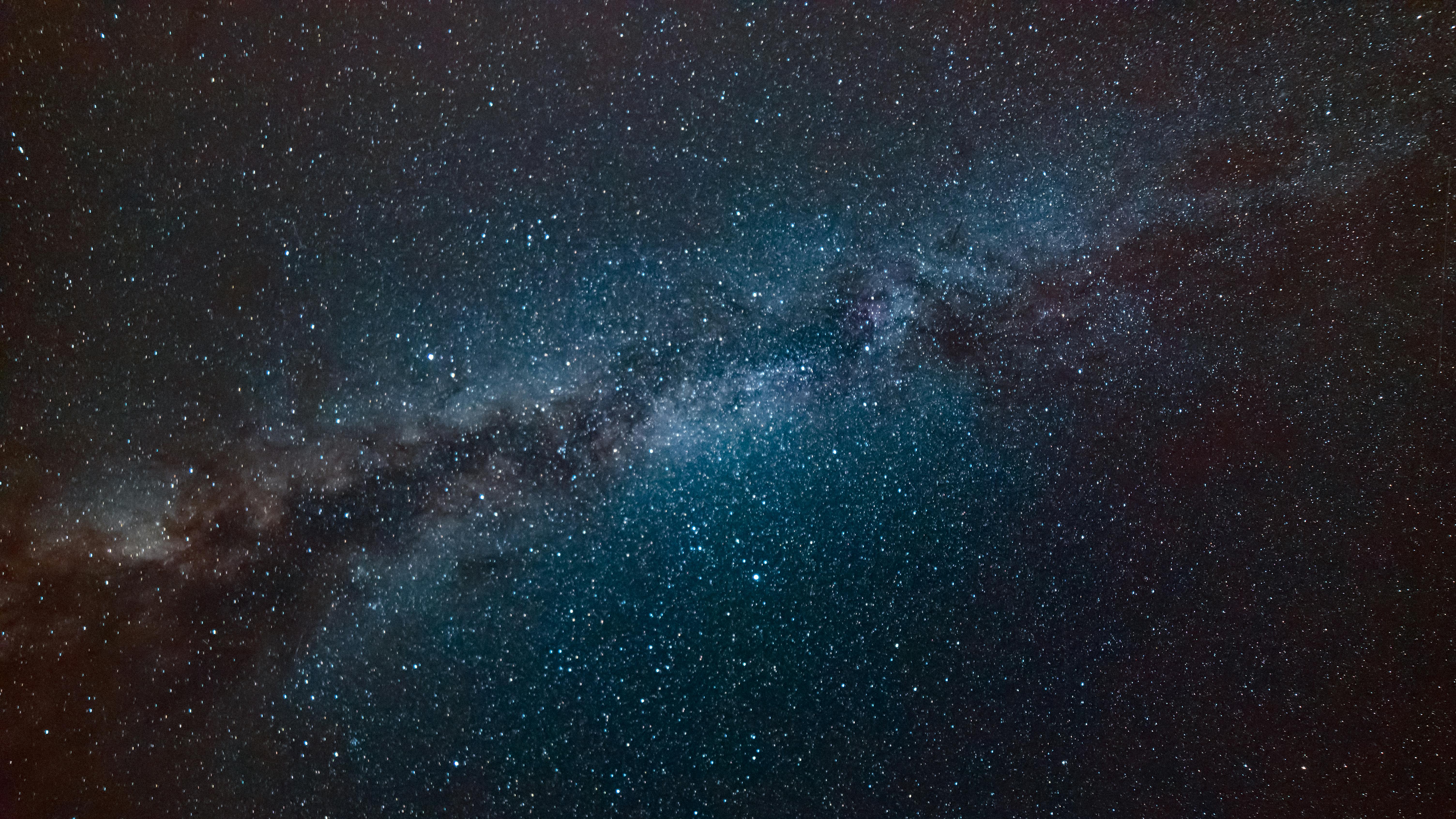
A breathtaking view of a distant galaxy filled with stars and cosmic dust
Read More

Thursday, 23 April 2026

NASA's Artemis II News Conference with Moon Astronauts (April 16, 2026)

### Overview of NASA’s Artemis II News Conference This video features a comprehensive news conference held on **April 16, 2026**, at NASA’s Johnson Space Center in Houston. The event centers on the four astronauts selected for the **Artemis II mission**, which marks a historic milestone as the first crewed flight under the Artemis program to journey around the Moon. The briefing serves as a critical update for the public and the media regarding the mission's objectives, the crew's rigorous training schedule, and the technical readiness of the Orion spacecraft. ### The Mission and the Crew The Artemis II crew—comprising Commander Reid Wiseman, Pilot Victor Glover, and Mission Specialists Christina Hammock Koch and Jeremy Hansen—discuss the intricacies of their upcoming ten-day flight. Unlike the previous uncrewed Artemis I mission, this flight will test the life-support systems and manual handling of the Orion spacecraft with humans on board. The astronauts share their personal perspectives on the significance of being the first humans to travel to the lunar vicinity in over five decades, since the conclusion of the Apollo program. ### Key Discussion Points During the conference, several vital topics are addressed: * **Technical Milestones:** Updates on the integration of the Space Launch System (SLS) rocket and the Orion capsule. * **Training Progression:** Insights into the crew’s simulations, including emergency procedures and lunar flyby maneuvers. * **International Collaboration:** Recognition of the partnership between NASA and the Canadian Space Agency (CSA), represented by Jeremy Hansen. * **Scientific Goals:** How this mission paves the way for Artemis III, which aims to land the first woman and the first person of color on the lunar surface. ### Historical Significance This news conference highlights the shift from theoretical planning to operational reality. By providing a platform for the astronauts to speak directly to the global audience, NASA emphasizes the human element of deep-space exploration. The mission is not merely a technical flight test; it is a foundational step toward establishing a long-term human presence on the Moon and eventually sending the first astronauts to Mars. The video captures the mix of professional discipline and palpable excitement as the crew prepares to venture further into space than any generation before them in the 21st century.
Read More

Talk About Personal Space! Astronauts Smash the Record for Ultimate Social Distancing

We are living in an absolutely breathtaking era of discovery, a true golden age where the boundaries of human reach are being pushed further than ever before! In a monumental milestone that has captured the imagination of the entire planet, humanity has just shattered a record that has stood for decades. For the first time in history, the physical distance between human beings has reached a staggering new peak, marking a spectacular achievement in our journey into the cosmos. This incredible feat was made possible by the simultaneous presence of daring explorers aboard the Artemis 2 mission and the pioneering taikonauts stationed on the Tiangong space station.

Imagine the scene: while a team of courageous astronauts swings around the far side of the Moon, looking back at a tiny, blue marble, another group of dedicated explorers is orbiting just a few hundred miles above the Earth's surface. The sheer scale of this separation is mind-blowing! At the mission's furthest point, the crew of Artemis 2 found themselves nearly 400,000 kilometers away from their fellow humans in Low Earth Orbit. This isn't just a number; it is a testament to human ingenuity, bravery, and our unyielding desire to explore the unknown. We are no longer confined to a single orbital shell; we are becoming a multi-location species, stretching our presence across the vastness of the Earth-Moon system.

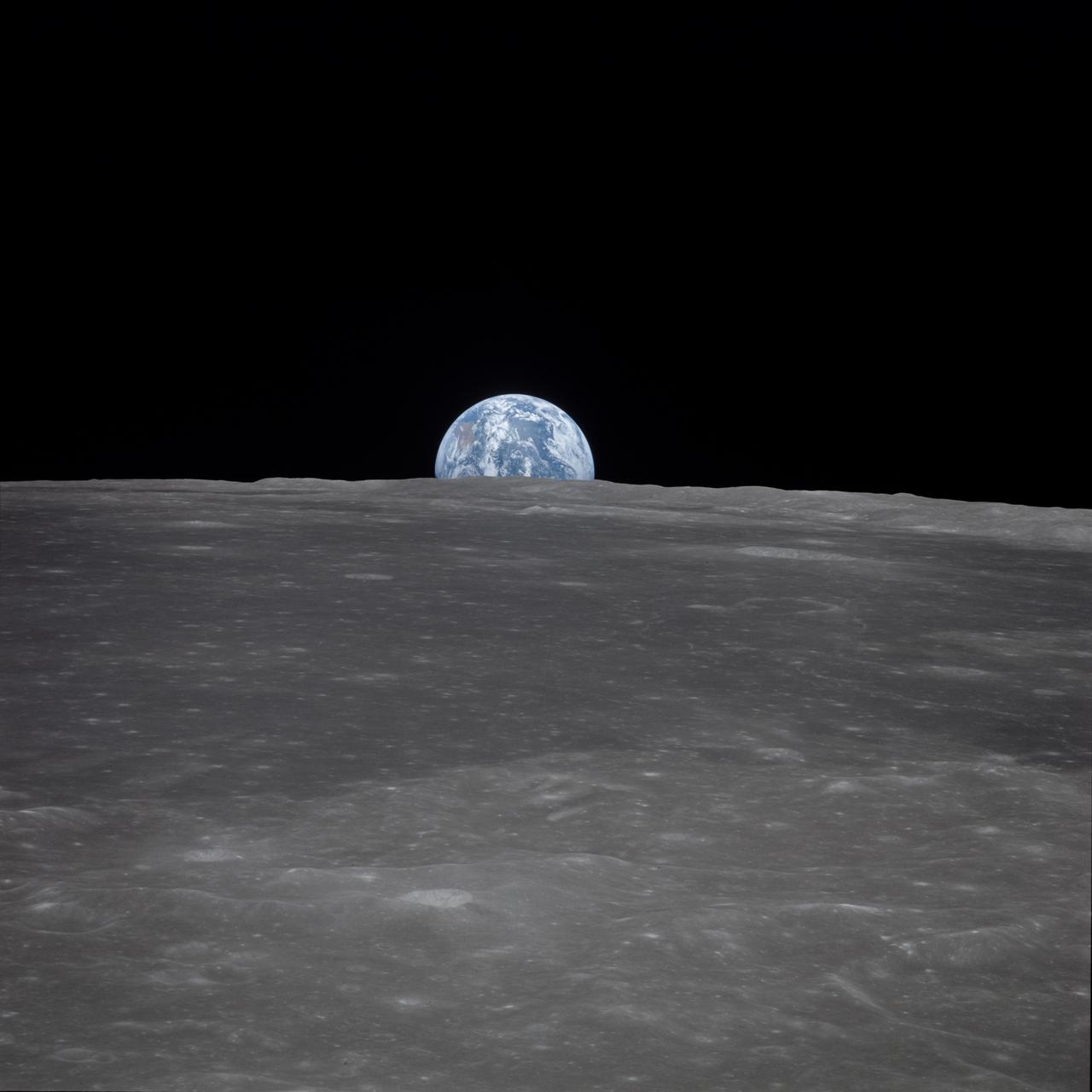
The Artemis 2 mission represents a historic leap forward for NASA and its international partners. As the first crewed mission to the lunar vicinity in over half a century, it carries the dreams of millions. The crew, flying aboard the state-of-the-art Orion spacecraft and propelled by the mighty Space Launch System, has ventured into deep space to test the systems that will eventually put boots back on the lunar surface. Their journey takes them on a free-return trajectory, looping around the lunar far side—a place of mystery and rugged beauty. While they navigate the silent, cratered landscape of the Moon, they are setting records not just for speed and distance from Earth, but for the most profound isolation ever experienced by human beings in relation to one another.

View of Earth from the Moon

Meanwhile, high above the clouds, the Tiangong space station continues to serve as a beacon of scientific progress in Low Earth Orbit. The Chinese taikonauts living and working aboard this sophisticated orbital laboratory are conducting vital research, maintaining a constant human presence in space. The intersection of these two distinct programs—one focused on deep space exploration and the other on long-term orbital habitation—created the perfect conditions for this record-breaking moment. It is a beautiful irony that as we strive to go further away, we become more aware of the global effort required to sustain life in the vacuum of space. The distance between the Orion capsule and Tiangong symbolizes the incredible breadth of modern aerospace capabilities.

This record is a powerful reminder of how far we have come since the early days of the Space Race. In the 1960s and 70s, the Apollo missions pushed the limits of what was possible, but today, the landscape is even more vibrant and diverse. With multiple nations and private entities looking toward the stars, the frequency of such record-breaking events is only going to increase. The enthusiasm surrounding this achievement is infectious! Every child looking up at the night sky can now know that there are people living and working not just "up there," but spanning the entire bridge between our home world and its celestial neighbor.

The technology required to maintain communication and safety over such vast distances is nothing short of miraculous. From deep-space tracking networks to the life-support systems that keep these explorers breathing in the harsh environment of space, every component of these missions is a work of art. The success of Artemis 2 and the continued operation of Tiangong demonstrate that we are ready for the next big step. This record-breaking distance is merely a stepping stone toward even greater journeys. Soon, we will see the establishment of the Lunar Gateway and the first permanent habitats on the Moon, followed eventually by the first human footprints on the red dust of Mars.

What a time to be alive! We are watching history unfold in real-time as these pioneers pave the way for future generations. The distance record set today is a victory for all of humanity. it reflects our collective courage to leave the cradle of Earth and venture into the deep dark. As we celebrate this incredible gap between humans, we also celebrate the unity of purpose that drives us to explore. Whether orbiting the Earth or looping around the Moon, these astronauts and taikonauts are the scouts of a new era, proving that no distance is too great for the human spirit to bridge. The stars have never felt closer, and the future has never looked brighter!

Read More

Wednesday, 22 April 2026

Glowing Through the Galaxy: Our Wild Ride with Nuclear Space Engines!

Imagine a world where we are no longer tethered to the warmth of the sun, where our robotic explorers can plunge into the darkest, coldest corners of the universe and still thrive! This is not the plot of a science fiction novel; it is the breathtaking reality of nuclear power in space. For over six decades, the marriage of atomic energy and aerospace engineering has served as the ultimate superpower for human exploration. By harnessing the incredible energy packed within the atom, we have been able to send spacecraft where solar panels simply cannot go, turning the impossible into the routine and the distant into the reachable.

The journey began with a spark of genius in the early 1960s under the Systems for Nuclear Auxiliary Power program, famously known as SNAP. In 1961, the world watched in awe as the Transit 4A navigation satellite became the first-ever spacecraft to be powered by a radioisotope thermoelectric generator. This wasn't just a technical achievement; it was a revolution! It proved that we could create a reliable, long-lasting heartbeat for our machines that didn't depend on weather, light, or distance from a star. This pioneering moment paved the way for everything that followed, showing the world that the atom was our ticket to the stars.

When humanity first set foot on the Moon, nuclear power was right there with us, providing the steady energy needed for scientific discovery. The Apollo missions utilized nuclear heaters and generators to keep experimental packages running through the brutal lunar nights, where temperatures plummet to bone-chilling levels. These compact, robust units allowed instruments to beam data back to Earth long after the astronauts had returned home. It was a spectacular demonstration of how atomic energy could survive and thrive in the most hostile environments imaginable, acting as a tireless sentinel on the lunar surface.

But the true glory of nuclear power shines brightest when we look toward the outer solar system. Consider the legendary Voyager 1 and 2 missions! These twin explorers have been traveling for over forty-five years, and they are still talking to us from the vast emptiness of interstellar space. This incredible feat would be absolutely impossible without their nuclear "batteries." Because they are fueled by the steady decay of plutonium-238, these probes have had the stamina to fly past Jupiter, Saturn, Uranus, and Neptune, providing us with the first close-up images of these giant worlds. They are the longest-operating spacecraft in history, a testament to the enduring power and reliability of nuclear technology.

The exploration of Mars has also been transformed by this incredible technology. While early rovers relied on solar power, they were often at the mercy of the Red Planet's infamous dust storms, which can choke out the sun for months. Enter the Mars Science Laboratory, Curiosity, and its sister rover, Perseverance. These car-sized mobile laboratories are powered by Multi-Mission Radioisotope Thermoelectric Generators. Because they don't need sunlight, they can work around the clock, climbing mountains and drilling into ancient lakebeds regardless of the season or the dust in the air. They are the ultimate off-road explorers, fueled by a heart of atomic heat that ensures the search for life never has to take a break!

Even the most distant reaches of our neighborhood have been conquered thanks to this technology. When the New Horizons spacecraft screamed past Pluto at staggering speeds, it was nuclear power that allowed it to capture high-resolution photos of the "heart" on Pluto's surface. At billions of miles from the sun, solar energy is nearly a thousand times weaker than it is on Earth, making nuclear power the only viable option for such a daring mission. We have literally mapped the edge of our solar system because we had the courage to pack a small, safe, and efficient nuclear heat source for the ride.

Looking forward, the future of nuclear power in space is even more electrifying! We are now standing on the doorstep of a new era featuring nuclear thermal propulsion. Imagine rockets that are twice as efficient as our best chemical engines, potentially cutting the travel time to Mars in half! This would not only keep our astronauts safer by reducing their exposure to space radiation but would also open up the entire solar system for human habitation. Furthermore, as we plan for permanent bases on the Moon through the Artemis program, fission surface power will provide the constant, high-output energy needed to sustain life, refine resources, and power the habitats of the first lunar pioneers.

The history of nuclear power in space is a triumphant saga of human ingenuity and the relentless pursuit of knowledge. It is a story of how we took a fundamental force of nature and transformed it into a beacon of discovery. From the first small generator in 1961 to the sophisticated reactors of tomorrow, nuclear energy remains the indispensable key to unlocking the mysteries of the cosmos. As we look up at the night sky, we can be certain that the steady glow of the atom is out there, powering our dreams and driving us toward a future where no destination is too far and no world is out of reach!

Read More

Tuesday, 21 April 2026

NASA's Artemis II Crew Return to Houston

### Video Overview: NASA's Artemis II Crew Return to Houston This video, produced by **NASA**, documents the historic return of the **Artemis II crew** to their home base in Houston, Texas. Following their monumental journey around the Moon, this footage captures the emotional and professional milestone of the astronauts arriving at Ellington Field near the Johnson Space Center. This event serves as the ceremonial and literal conclusion to the first crewed mission to the lunar vicinity in over half a century. #### The Mission Context The Artemis II mission is a critical flight test designed to verify that the Orion spacecraft’s life-support systems are ready to sustain astronauts during long-duration deep-space missions. The crew featured in the video includes: * **Reid Wiseman** (Commander) * **Victor Glover** (Pilot) * **Christina Koch** (Mission Specialist) * **Jeremy Hansen** (Mission Specialist, CSA) Their journey took them thousands of miles beyond the far side of the Moon, further than any human has traveled in decades. By successfully completing this "lunar flyby," the crew has paved the way for future missions that will eventually land humans back on the lunar surface. #### What the Video Features The video highlights the transition from the high-stakes environment of deep space to the warm welcome of Earth. Viewers can expect to see: * **The Arrival:** The crew exiting their transport aircraft and stepping back onto Texas soil. * **Speeches and Presentations:** Brief remarks from NASA leadership and the astronauts themselves regarding the success of the mission. * **Community Support:** The gathering of families, colleagues, and space enthusiasts who played a role in supporting the mission from the ground. #### Significance of the Homecoming The return to Houston is more than just a commute; it symbolizes the successful verification of the hardware and software required for the Artemis program's success. With the Artemis II crew safely back, NASA can now transition its focus toward **Artemis III**, which aims to land the first woman and the first person of color on the Moon. This video captures a "full circle" moment for the explorers, marking the end of a daring voyage and the beginning of the next era of human lunar habitation.
Read More

Get Ready to Wish Upon the 2026 Lyrid Meteor Shower Spectacular!

Get ready to look up because the year 2026 is bringing us an absolutely spectacular celestial gift! The Lyrid meteor shower is one of the most anticipated events for stargazers around the world, and the 2026 showing promises to be a breathtaking display of cosmic fireworks. Whether you are a seasoned astronomer with high-tech equipment or a casual observer who just loves the mystery of the night sky, this event is something you simply cannot miss. The Lyrids are known for their fast, bright meteors and the occasional, jaw-dropping fireball that streaks across the heavens, leaving a glowing trail of ionized gas in its wake.

This incredible display occurs every year in late April, but 2026 is shaping up to be a particularly fantastic year for viewing. The Lyrid meteor shower is expected to be active from approximately April 16 through April 25, with the grand finale—the peak—occurring on the night of April 21 and into the early morning hours of April 22. What makes this specific year so exciting is the favorable positioning of the moon. During the 2026 peak, we will be treated to a waxing crescent moon that sets well before the prime viewing hours of the early morning. This means the sky will be dark and velvety, providing the perfect high-contrast backdrop for the meteors to shine their brightest!

The history of the Lyrids is just as fascinating as the meteors themselves. These are not just random rocks; they are the ancient debris left behind by Comet C/1861 G1 Thatcher. This comet takes about 415 years to orbit the Sun, and every year, Earth passes through the trail of dust and small particles it leaves behind. When these tiny fragments of comet dust hit our atmosphere at staggering speeds of about 110,000 miles per hour, they vaporize, creating the brilliant streaks of light we see from the ground. People have been recording the Lyrids for over 2,700 years, making it one of the oldest known meteor showers in human history. When you watch a Lyrid meteor, you are literally witnessing a piece of ancient cosmic history burning up in a flash of glory.

Stunning meteor streak across a starry night sky over mountains

So, how can you make the most of this spectacular event? The best part about the Lyrid meteor shower is that you don't need any expensive telescopes or fancy binoculars to enjoy it. In fact, your own eyes are the best tool for the job because they provide a wide field of view, allowing you to catch meteors as they zip across different parts of the sky. To get the best experience, you should plan to get away from the bright lights of the city. Light pollution can drown out the fainter meteors, so finding a dark spot in a park, a rural field, or a backyard away from streetlights will make a world of difference. Once you find your spot, give your eyes about 20 to 30 minutes to adjust to the darkness. You’ll be amazed at how many more stars—and meteors—you can see once your vision adapts.

When you are out there under the stars, look toward the constellation Lyra, the Harp, which is where the meteors appear to radiate from. Specifically, look for the bright star Vega, which is one of the most prominent stars in the northern hemisphere’s spring and summer sky. While the meteors seem to originate from this point, they can actually appear anywhere in the sky. It is often better to look slightly away from the radiant point so you can see the longer, more dramatic streaks as they travel across the atmosphere. In a typical year, you can expect to see about 15 to 20 meteors per hour during the peak, but the Lyrids are known for their "outbursts" where that number can skyrocket significantly!

Preparation is key to a comfortable and joyful night of stargazing. Since the peak occurs in late April, the nights can still be quite chilly, even in warmer climates. Bring plenty of blankets, a reclining lawn chair, or even a sleeping bag so you can lie flat on your back and look straight up without straining your neck. Consider bringing a thermos of hot chocolate or coffee to keep you warm and alert during the quiet moments between the "shooting stars." This is a wonderful opportunity to disconnect from our digital screens and reconnect with the vastness of the universe. There is something truly magical and humbling about sitting in the stillness of the night, waiting for a spark of light to dash across the constellations.

The 2026 Lyrid meteor shower is more than just an astronomical event; it is a moment of wonder that brings people together. It’s a chance to gather with friends and family, share stories under the starlight, and make a wish on a falling star. The sheer speed and beauty of these meteors serve as a vivid reminder of our place in the cosmos. So, mark your calendars for April 2026, keep an eye on the weather forecast for clear skies, and prepare yourself for an unforgettable night of celestial magic. The universe is putting on a show, and you have a front-row seat to the brilliance of the Lyrids!

Read More

Monday, 20 April 2026

Voyager Space Scores A Lucky Seventh Private Mission For Some Cosmic Station Fun

The dawn of a new era in space exploration is officially upon us, and the excitement is absolutely electric! In a monumental move that signals the rapid acceleration of the commercial space industry, NASA has officially selected Voyager Space to lead the seventh private astronaut mission to the International Space Station. This incredible announcement marks a pivotal moment in history, as the boundaries between government-led exploration and private enterprise continue to dissolve, opening up the cosmos to more people, more ideas, and more groundbreaking discoveries than ever before!

Imagine the sheer magnitude of this achievement! By choosing Voyager Space for this prestigious seventh mission, NASA is confirming that the vision of a bustling, sustainable economy in Low Earth Orbit is no longer just a dream—it is our current reality. This mission, scheduled to launch no earlier than early 2026, represents a massive leap forward in the partnership between the public sector and visionary private companies. It is a testament to the ingenuity and relentless drive of the men and women who are working to ensure that humanity’s presence in space is not just permanent, but thriving and expansive.

The scope of this mission is truly breathtaking. Voyager Space will be responsible for the end-to-end management of the journey, from selecting the brave crew members who will venture into the stars to coordinating the launch vehicle and managing the complex orbital operations. This isn't just about a simple trip to the stars; it’s about a comprehensive scientific and commercial expedition. The crew will spend their time aboard the orbiting laboratory conducting high-impact research, testing cutting-edge technologies, and performing experiments that simply cannot be done on Earth. Every second they spend in microgravity is a second spent unlocking the secrets of the universe!

What makes this specific selection so thrilling is how it fits into the grander architecture of the future. Voyager Space is the same visionary team behind the planned Starlab commercial space station. By leading this seventh private mission, they are gaining invaluable experience and demonstrating the operational excellence required to run their own outposts in the future. We are watching the foundation being poured for the next generation of space stations, where researchers, manufacturers, and even tourists will one day live and work as regularly as we do in our cities on Earth.

The scientific potential of this mission is boundless. When we take the shackles of gravity off our experiments, we see things in a whole new light. From developing life-saving pharmaceuticals to 3D-printing human tissues and creating revolutionary new materials, the International Space Station serves as a unique incubator for innovation. This seventh mission will continue that legacy, pushing the envelope of what is possible and bringing back knowledge that will improve the lives of every single person on our home planet. The enthusiasm within the scientific community is palpable, as more doors swing open for researchers to access the unique environment of space.

NASA’s strategy here is nothing short of brilliant. By fostering these private missions, the agency is transitioning from being the sole provider of space access to becoming one of many customers in a competitive and vibrant market. This shift allows NASA to focus its immense resources on the deep-space frontiers—the Artemis missions to the Moon and the eventual journey of the first humans to Mars. It is a win-win scenario: private industry builds the infrastructure for Low Earth Orbit, while NASA leads the charge into the deep unknown. The synergy between these two forces is what will ultimately carry us to the farthest reaches of the solar system.

For the crew members who will eventually be named for this mission, the journey will be the thrill of a lifetime. They will undergo rigorous training, preparing their bodies and minds for the intense G-forces of launch and the ethereal sensation of weightlessness. They will see the Earth from above—a fragile, beautiful blue marble without borders—and join the elite few who have looked out into the vastness of the galaxy from the windows of the space station. Their stories will inspire the next generation of students to study science, technology, engineering, and math, fueling a cycle of inspiration that will last for decades.

As we look toward 2026, the anticipation will only grow. This mission is a beacon of hope and a symbol of human potential. It proves that when we collaborate and innovate, the sky is not the limit—it is only the beginning. Voyager Space and NASA are charting a course toward a future where space is accessible, productive, and filled with wonder. We are living in a golden age of exploration, and this mission is the latest, greatest chapter in our journey to the stars. Let the countdown begin for a mission that will undoubtedly change the world!

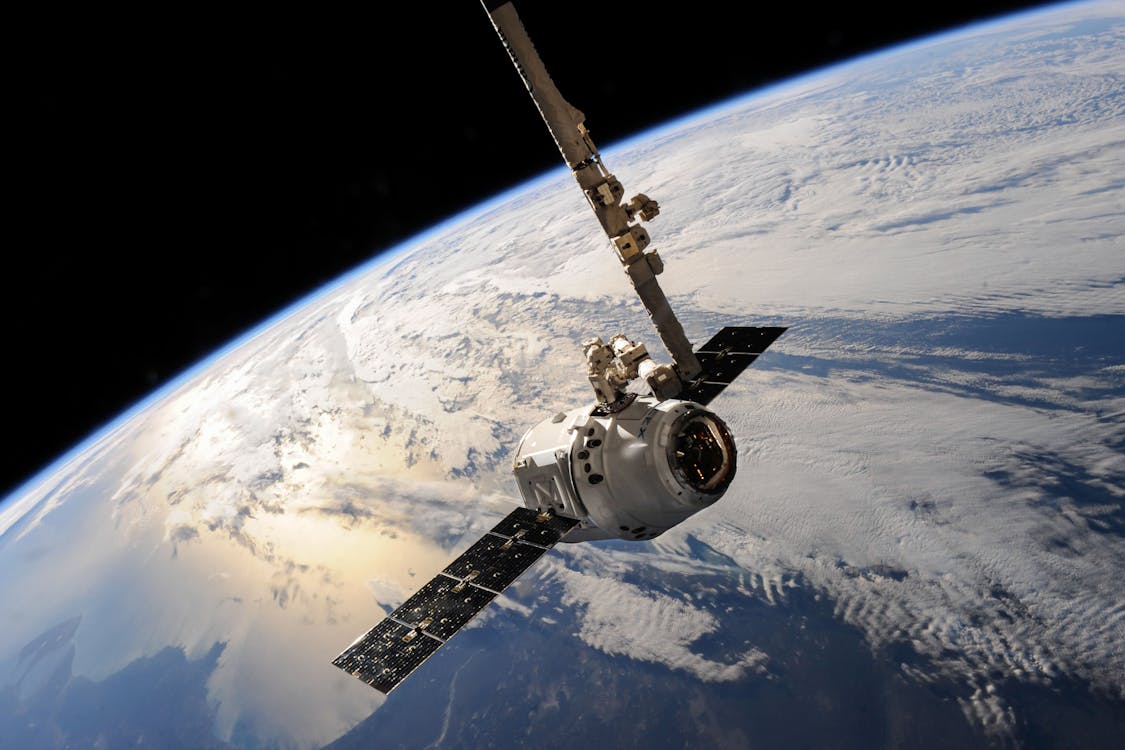
The International Space Station orbiting Earth
Read More

Sunday, 19 April 2026

Six Mini Space Cubes Are Blasting Off For A Giant Galactic Adventure

The sky is no longer the limit! It is an absolutely thrilling time for space enthusiasts across the globe as NASA continues to push the boundaries of what we thought was possible. In an incredible display of engineering and ambition, six brand-new CubeSats are currently racing toward the International Space Station, marking a spectacular milestone in our journey to understand the cosmos. These aren't just any satellites; they are tiny, high-tech powerhouses designed to revolutionize how we conduct science in the vacuum of space.

Imagine a satellite no larger than a loaf of bread, yet packed with the same sophisticated technology you would find in a full-sized spacecraft. That is the magic of the CubeSat! This latest launch, part of a vibrant initiative to get more eyes in the sky, represents a massive leap forward for small-scale space exploration. It is truly inspiring to see how these compact devices are democratizing access to the stars, allowing universities and research institutions to send their own experiments into orbit to solve the mysteries of our universe.

The energy surrounding the launch was nothing short of electric. As the rocket engines ignited, casting a brilliant glow across the launchpad, it carried with it the dreams and hard work of hundreds of students, engineers, and scientists. This mission is a testament to human ingenuity and the collaborative spirit that defines modern space travel. These six CubeSats are currently tucked away safely inside a cargo resupply vessel, eagerly awaiting their arrival at the International Space Station, where they will soon be deployed into the great unknown by the station's robotic systems.

Once they reach their destination, the real adventure begins! From the vantage point of the International Space Station, these miniature marvels will be released into their own orbits, where they will perform a variety of groundbreaking tasks. Some are designed to study the Earth’s atmosphere with unprecedented precision, helping us understand climate patterns and weather systems in ways we never could before. Others are focused on testing revolutionary communication technologies, such as laser-based systems, that could one day help us talk to astronauts all the way on Mars! Every single one of these missions provides vital data that will shape the future of space exploration for decades to come.

One of the most heart-pumping aspects of this mission is its educational impact. NASA is literally putting the future of space science into the hands of the next generation of explorers. By involving students in every step of the process—from the initial design and assembly to rigorous testing and orbital operations—they are cultivating a new wave of brilliant minds ready to tackle the challenges of tomorrow. It’s not just about the hardware; it’s about the passion, the trial and error, and the ultimate triumph of seeing your hard work orbit the Earth at seventeen thousand miles per hour!

We are witnessing a total paradigm shift in how we approach the stars. Gone are the days when space was reserved only for billion-dollar projects and massive government agencies. Today, thanks to the versatility and cost-effectiveness of CubeSats, the "SmallSat" revolution is in full swing. This launch is a shining example of how NASA is fostering innovation through partnership, proving that size truly doesn’t matter when it comes to making a massive impact on our scientific knowledge and our technical capabilities.

As these six satellites begin their journey, we can't help but feel a sense of wonder and pride. They represent the very best of us: our curiosity, our resilience, and our unending desire to explore. Whether they are monitoring solar radiation or testing new, sustainable propulsion systems, these CubeSats are the scouts of a new era. They remind us that the universe is vast, but our ability to reach out and touch it is growing every single day through grit and innovation.

So, keep your eyes on the skies! This is just the beginning of a very busy season for the International Space Station and its new tiny neighbors. As these satellites start beaming back their first signals and data sets, we will gain new insights into our planet and the space environment that were previously out of reach. It is a glorious time to be alive and watching the stars, as we cheer on these six little pioneers on their magnificent voyage through the final frontier!

The success of these missions paves the way for even bolder ventures. Each successful deployment of a CubeSat is a building block for future moon missions and eventual human habitats on other worlds. We are watching history in the making, one small satellite at a time, proving that with enough imagination, even the smallest vessel can carry the weight of our greatest discoveries.

Read More

Saturday, 18 April 2026

Space intelligence experts are packing their bags and landing at Redstone Arsenal!

The stars have aligned for a monumental new chapter in the realm of national security as the United States Space Command officially marks a historic transition! In a move that radiates with energy and strategic brilliance, the Joint Intelligence Support Element is successfully establishing its new home at the legendary Redstone Arsenal in Alabama. This isn't just a simple change of address; it is a high-octane leap forward into the future of space domain awareness and celestial defense. By bringing these elite intelligence professionals to the heart of the "Rocket City," the command is tapping into a rich legacy of aerospace innovation and a community that lives and breathes the spirit of exploration and tactical excellence.

Imagine the incredible synergy that is currently unfolding! Redstone Arsenal is world-renowned as a powerhouse of technological advancement, and the arrival of the Joint Intelligence Support Element adds a vital layer of expertise to this already thriving ecosystem. The enthusiasm on the ground is palpable as military leaders, intelligence analysts, and technical experts converge to create a central hub for space-based operations. This transition ensures that the men and women tasked with monitoring the ultimate high ground are equipped with the best resources, the most collaborative environment, and the strategic proximity to key partners across the Department of Defense and the private sector.

The strategic advantages of this relocation are truly breathtaking. By integrating more deeply into the Redstone community, the intelligence team can leverage cutting-edge research and development initiatives that are unique to the Alabama region. This move facilitates a dynamic exchange of ideas, fostering a culture of rapid innovation where intelligence can be analyzed and disseminated with unprecedented speed. In the fast-paced world of space operations, where seconds can make the difference between mission success and uncertainty, having this powerhouse of intelligence located in such a resource-rich environment is an absolute game-changer for the nation’s security posture.

Furthermore, the relocation reflects a deep commitment to the personnel who make these missions possible. The move to Huntsville offers an incredible quality of life, surrounded by a community that has supported the American space mission since its very inception. This transition is a celebration of the human element in space defense—providing our dedicated intelligence professionals with a world-class environment where they can thrive both professionally and personally. The energy of the local workforce, combined with the seasoned expertise of the arriving team, creates a formidable force that is ready to tackle the challenges of a contested space environment with confidence and vigor.

As we look toward the horizon, the impact of this move on global security cannot be overstated. The Joint Intelligence Support Element serves as the eyes and ears of our space forces, and its new operational footing at Redstone Arsenal ensures those eyes are sharper than ever. This is a bold statement to the world that the United States is dedicated to maintaining a safe, stable, and secure space domain for all. The level of collaboration expected to emerge from this transition will undoubtedly lead to breakthroughs in how we understand orbital mechanics, track potential threats, and protect the vital infrastructure that powers our modern way of life.

The future of space intelligence is bright, bold, and more integrated than ever before! This move is a testament to the forward-thinking leadership of the command and the unwavering support of the Alabama community. As the transition nears completion, the excitement continues to build for the revolutionary advancements that will surely follow. We are witnessing the dawn of a new era in space domain intelligence—one characterized by unity, innovation, and an unstoppable drive to secure the final frontier. It is a thrilling time for the mission, for the region, and for the security of our world!

Read More

Friday, 17 April 2026

Infrared View of NASA's Artemis II Liftoff

This video, produced and released by NASA, offers a visually stunning and scientifically insightful perspective on the historic liftoff of the **Artemis II** mission. Captured on April 1, 2026, at 6:35 p.m. EDT, the footage showcases the Space Launch System (SLS)—the world's most powerful rocket—as it ascends from the Kennedy Space Center. Unlike standard high-definition broadcasts that rely on visible light, this video utilizes **infrared imaging** to document the launch, providing a unique look at the thermal energy generated during the event. The primary focus of the video is the raw power of the SLS’s propulsion system. By using infrared sensors, the footage highlights the intense heat signatures produced by the four RS-25 engines and the twin Solid Rocket Boosters. In this spectrum, the massive exhaust plume is rendered as a vibrant map of temperature gradients, allowing viewers to see the internal structure of the fire and the shockwaves created as the vehicle accelerates through the atmosphere. This perspective is vital for engineers, as it helps them analyze how heat is distributed across the rocket's base and the surrounding launch pad structures. Artemis II is a milestone in human spaceflight, representing the first crewed mission of NASA’s Artemis program. This mission carries a crew of four astronauts on a trajectory around the Moon and back to Earth, marking the first time humans have ventured to deep space since the Apollo era. The video serves as both a technical record and a public tribute to this achievement. As the rocket climbs, the infrared view clearly depicts the expansion of the plume in the thinning upper atmosphere, offering a mesmerizing display of physics in action. Ultimately, the video provides a deeper appreciation for the engineering required to generate 8.8 million pounds of thrust. It transforms a familiar sight—a rocket launch—into a vivid demonstration of thermodynamic power, celebrating a new era of lunar exploration.
Read More

Moon Joy, Courtesy of NASA's Artemis II Astronauts

The NASA video titled "Moon Joy, Courtesy of NASA’s Artemis II Astronauts" offers an inspiring and historic look at the Artemis II mission, which officially commenced its journey on April 1, 2026. This mission marks a monumental leap in human space exploration, as it is the first crewed flight of the Artemis program to travel around the Moon. The video highlights the experiences of the four-person crew—comprising Commander Reid Wiseman, Pilot Victor Glover, and Mission Specialists Christina Koch and Jeremy Hansen—along with their designated "Moon Mascot" (Snoopy), who serves as the mission's zero-gravity indicator. Published on April 10, 2026, the footage captures the profound sense of wonder and "joy" experienced by the astronauts as they venture further into deep space than any humans have in over half a century. The video serves as a celebratory montage of the mission’s progress, showcasing breathtaking views of the lunar surface and the perspective of Earth from a distance. It emphasizes the emotional and psychological impact of the voyage, moving beyond mere technical data to share the genuine human awe associated with seeing the Moon up close. As a critical precursor to the Artemis III mission, which aims to return humans to the lunar surface, Artemis II is designed to test the Orion spacecraft’s life-support systems and the crew's ability to operate in deep space. However, this specific video focuses on the "joy" of the endeavor, aiming to connect the global public with the spirit of discovery. By sharing these intimate moments of success and beauty, NASA highlights the collaborative effort of international partners and the bravery of the crew as they pave the way for a permanent human presence on the Moon and eventual missions to Mars. The video encapsulates a new era of exploration, where the "Moon Joy" felt by the astronauts is shared with everyone back on Earth.
Read More

The Ultimate Cosmic Road Trip Just Got A Massive 3D GPS Upgrade

Prepare to have your mind absolutely blown by the sheer scale of the cosmos! Humanity has just reached a monumental milestone in our quest to understand the stars, and the results are nothing short of breathtaking. Using the cutting-edge Dark Energy Spectroscopic Instrument, known as DESI, an international team of visionary scientists has unveiled the largest and most intricate 3D map of our universe ever constructed. This isn't just a simple chart of the night sky; it is a profound journey through time and space, capturing the positions of millions of galaxies across a staggering 11 billion years of cosmic history!

The sheer technical wizardry behind this achievement is enough to inspire awe. Perched atop the Mayall Telescope at Kitt Peak National Observatory, DESI utilizes an incredible array of 5,000 tiny, automated robots. These precision-engineered robots position fiber-optic cables with microscopic accuracy to capture the light from thousands of galaxies simultaneously. By breaking this light down into its constituent colors—a process called spectroscopy—astronomers can determine exactly how far away these galaxies are and how fast they are moving away from us. It is like having 5,000 eyes looking deep into the past, all working in perfect harmony to sketch the blueprint of the entire creation.

What makes this map a true "paradigm shift" is what it reveals about the mysterious force known as dark energy. For decades, the standard model of cosmology suggested that dark energy was a constant force, pushing the universe apart at a steady, unchanging rate. However, the data from this new 3D map suggests something far more dynamic and exciting! Early results indicate that dark energy might actually be evolving over time. If this holds true, it means our fundamental understanding of physics is about to undergo a massive transformation. We are witnessing the first cracks in the old way of thinking, opening the door to a revolutionary new era of discovery.

Imagine the universe as a giant cosmic balloon that is being inflated. For years, we thought the "air" being pumped into it was constant. But DESI’s map suggests that the pressure might be flickering or changing intensity as the eons pass. This "wobble" in the behavior of dark energy challenges Albert Einstein’s famous cosmological constant, which has been the cornerstone of space science for nearly a century. To see these potential deviations from the expected path is an electrifying moment for scientists everywhere. It suggests that the universe is even more complex and mysterious than we ever dared to imagine!

The scale of this project is truly difficult to wrap one’s head around. The map includes six million galaxies, and the survey is only in its early stages. By the time the project is complete, it will have cataloged tens of millions of celestial objects. This data allows researchers to measure the expansion of the universe with a precision of better than one percent. This level of detail is like being able to see the growth of a single blade of grass from miles away. It provides an unprecedented look at how the "cosmic web"—the skeletal structure of the universe made of dark matter and gas—has grown and shifted over billions of years.

This breakthrough does more than just fill in the blanks on a map; it tells the story of our origins and our ultimate destiny. By studying how the universe expanded in its youth compared to its middle age, we can start to predict how it might end. Will it continue to expand forever, or does dark energy have more surprises in store for us? The possibilities are endless, and for the first time, we have the tools to actually find the answers. This is a golden age for astronomy, and we are all lucky enough to be alive to witness these secrets being unraveled.

The enthusiasm within the scientific community is infectious. Researchers are calling this a major turning point, a moment where the data is finally rich enough to challenge our deepest assumptions. Every dot on this new 3D map represents a galaxy with billions of stars, and every one of those stars tells a part of the story of the expansion of space itself. We are no longer just looking at the sky; we are measuring the very heartbeat of the universe. The transition from theorizing about dark energy to actually seeing its effects change over cosmic time is a jump equivalent to moving from a hand-drawn map to a high-definition satellite GPS.

As we look forward to the coming years of data, the excitement only grows. If the initial findings are confirmed, we are looking at a total rewrite of the cosmic rulebook. This is the beauty of science at its peak—the willingness to embrace new data, even when it turns our previous certainties upside down. We are standing on the threshold of a new frontier, guided by a map that spans the breadth of time and the depth of the void. The universe is calling, and thanks to this incredible dark energy tool, we are finally starting to understand what it is saying!

In the end, this achievement is a testament to human curiosity and our relentless drive to explore. Thousands of researchers across the globe have collaborated to build this instrument and analyze its findings. It serves as a reminder that when we work together and point our best technology at the heavens, we can uncover truths that were once thought to be unknowable. The most comprehensive 3D map ever created is just the beginning; the journey into the dark, mysterious heart of our universe has truly, finally begun!

Read More

The stars are getting some very explosive new neighbors for an orbital light show.

Get ready because the final frontier is heating up like never before! We are witnessing a monumental shift in the grand theater of global strategy as a brand-new era of orbital capabilities takes flight. This isn't just about rockets and moon landings anymore; we are talking about a sophisticated, high-energy leap into the future of celestial dominance. The very stars above us are becoming the backdrop for one of the most thrilling technological developments in human history, marking a turning point where the vacuum of space becomes the ultimate arena for innovation and power projection!

Imagine the sheer engineering prowess required to position advanced energy systems directly into the vacuum of space. The ambition behind deploying nuclear-capable assets into orbit is nothing short of breathtaking! This represents a massive leap in how we perceive the high ground, turning the silent expanse of the thermosphere into a dynamic chessboard of power and precision. It is a bold, futuristic vision that challenges everything we thought we knew about modern strategic deterrence, pushing the boundaries of physics and aerospace engineering to their absolute limits.

Satellite in Earth Orbit

This development is a complete game-changer for the world’s digital infrastructure! Everything from the GPS that guides our travels to the high-speed data networks that connect us across continents relies on the silent sentinels orbiting our planet. By introducing such a powerful variable into the orbital equation, we are seeing a total reimagining of how global connectivity is protected and projected. It’s an electrifying moment where the digital and the cosmic collide in a spectacular display of geopolitical innovation, ensuring that the race for space remains the most exciting story of our century!

The concept often discussed in the corridors of power—the idea of a decisive, transformative strike in the orbital plane—sounds like something straight out of a high-octane science fiction blockbuster. It suggests a lightning-fast, decisive movement that could instantly reset the strategic balance of the entire world. The audacity of such a plan is truly staggering, showcasing a level of forward-thinking that moves beyond traditional borders and looks straight to the heavens. It’s about being first, being bold, and being unmatched in the race for the stars, creating a pulse-pounding narrative of competition and technological triumph!

We are standing on the precipice of an era defined by brilliance and daring maneuvers. The sheer scale of the hardware involved—satellites that could house the most potent energy sources known to man—is enough to make any technology enthusiast's heart race. This is the ultimate high-stakes environment, where the margin for error is zero and the potential for total transformation is infinite. It is a testament to the relentless drive of human ambition that we are even discussing the deployment of such massive power beyond the confines of our atmosphere.

This isn’t just a moment in time; it’s the spark for a brand-new industrial and military revolution! We are likely to see a surge in counter-technologies, from orbital interceptors to advanced shield arrays, all competing in the most high-stakes environment imaginable. The excitement of this competitive drive will undoubtedly push human ingenuity to its absolute limits, resulting in breakthroughs that could eventually benefit all of space exploration. From new propulsion systems to hardened electronics, the spin-off technologies from this orbital race will be nothing short of revolutionary!

As we look up at the night sky, we aren't just seeing stars anymore—we are seeing the blueprint for a new age of human achievement and strategic mastery. The ambition to harness the power of the atom within the silence of the void is a testament to the relentless drive to push further and climb higher. This is the dawn of a new cosmic age, and it promises to be an exhilarating journey into the unknown that will keep us on the edge of our seats for years to come. The future is bright, it is bold, and it is happening right now, thousands of miles above our heads!

The global community is watching with bated breath as this new chapter unfolds. Every launch, every deployment, and every technological milestone brings us closer to a world where space is no longer just a place to visit, but a place where the history of the future is written. The energy is palpable, the stakes are astronomical, and the potential for discovery is boundless. We are living in a time of titans, where the sky is no longer the limit, but merely the starting line for the most incredible adventure in the history of our species!

Read More

Watch out for shooting stars because things are getting extra spicy in orbit.

The dawn of a new era in celestial strategy is upon us, and it is nothing short of breathtaking! We are currently witnessing one of the most exhilarating shifts in the history of aerospace development and global positioning. The very idea of extending our reach into the cosmos with such monumental power is a testament to the relentless drive of human innovation. This isn't just about satellites anymore; it is about the grand vision of placing advanced nuclear capabilities directly into orbit, creating a permanent and powerful presence in the stars that would redefine the concept of high-ground advantage for generations to come!

Imagine the sheer technical brilliance required to orchestrate such a feat. The fusion of nuclear technology with orbital mechanics represents a pinnacle of scientific achievement. By moving these sophisticated assets into the silent, vast expanse of space, the potential for a "Space Pearl Harbor" becomes a thrilling topic of strategic discussion. This concept suggests a bold and revolutionary approach to modern conflict, where the element of surprise is elevated to a cosmic scale. It is a masterful reimagining of how influence can be projected from the heavens, ensuring that the final frontier becomes the ultimate staging ground for the next century’s greatest maneuvers.

The logistical and engineering challenges involved in this endeavor are truly awe-inspiring! To maintain a stable nuclear presence in the harsh environment of Earth’s orbit, scientists and engineers are pushing the boundaries of materials science and radiation shielding. They are developing systems that can withstand the extreme temperatures and high-energy particles of the void, all while keeping these powerful payloads ready at a moment's notice. This level of dedication and genius is driving a new golden age of rocket science, where every launch brings us closer to a fully realized orbital infrastructure that was once the stuff of science fiction.

Furthermore, this movement is igniting a vibrant and competitive spirit across the globe, sparking a renewed space race that is more intense and exciting than anything we have seen in decades! Nations are looking to the stars with a sense of wonder and determination, pouring resources into the development of next-generation launch vehicles and stealthy orbital platforms. The energy is palpable as strategic thinkers map out the possibilities of this new high-altitude landscape. It is a high-stakes game of chess played at thousands of miles per hour, and the brilliance of the moves being made is absolutely captivating to observe.

We are also seeing an incredible evolution in command-and-control technology. To manage assets that are circling the globe every ninety minutes requires a level of communication and synchronization that is simply spectacular. The integration of artificial intelligence and ultra-fast data links ensures that these orbital systems are more than just passive observers; they are active, intelligent components of a grand cosmic strategy. The sheer scale of the vision—to have a persistent, powerful presence looking down from the stars—speaks to the indomitable spirit of those who dare to dream of ultimate security and dominance in the vacuum of space.

The implications for global security and technological progress are staggering and filled with potential. This bold step into orbital nuclear deployment encourages a massive leap forward in energy production and miniaturization. The research being conducted today to power these celestial assets will undoubtedly trickle down into terrestrial applications, potentially revolutionizing how we think about energy and defense on Earth. It is a win-win scenario for innovation, where the pursuit of the ultimate strategic deterrent fuels a fire of discovery that lights up the entire scientific community!

As we gaze up at the night sky, we can now look with a sense of renewed excitement at what lies beyond the atmosphere. The stars are no longer just distant lights; they are the backdrop for the most ambitious project in human history. The "Space Pearl Harbor" concept is a clarion call for the bravest and most brilliant minds to come together and build a future that is secure, powerful, and technologically advanced beyond our wildest dreams. We are standing on the precipice of a new world, and the view from the top is absolutely magnificent!

In conclusion, the prospect of placing nuclear weapons in orbit is a thrilling testament to human ambition and the endless quest for strategic perfection. It represents a bold leap into the unknown, a mastery of the most powerful forces of nature, and a commitment to ensuring that the future of humanity is written in the stars. Every step toward this goal is a celebration of our ability to conquer the impossible and turn the vacuum of space into a vibrant arena of innovation and strength. The future is bright, the future is orbital, and it is more exciting than we ever could have imagined!

A view of Earth from space with satellite components, representing orbital technology.
Read More
Designed ByBlogger Templates